4 – 8 November
Well we have come to our last (planned) off-road adventure, and one which we have been looking forward to for long time; Fraser Island. Situated 250 odd km north of Brisbane, it is the largest sand island in the world at just over 123km long and 25km at its widest point, comprised mainly of fine white silica sands. It is a 4WD paradise for some and a relaxing getaway for others, either way it is a pretty cool place to spend a few days. It’s little wonder how it attracts over quarter of a million visitors each year.
We started our trip from the southern access ferry at Hook Point just north of Rainbow Beach. The ferry is a simple barge with lifting ramps on each end which it just drops onto the beach, no fancy concrete loading ramps, just the soft white sand. The first challenge of the trip is to get from the bitumen road along a 250m stretch of soft sand and onto the barge without getting bogged, some are not so lucky, but our Troopy did admirably. The ferry doesn’t actually stop moving, being constantly pulled by the current along the beach, so the ten vehicles waiting need to get on as quickly as possible. It’s the same story at the other end.
Then starts the long beach drive up the east coast of the island. All the guides we had read talked about not travelling on the beach two hours either side of high tide, and unfortunately the tides were against us being low early in the morning and late in the afternoon the entre time we would be there. But we’ll make do. We were heading to the wreck of the Mahino to camp for the night, and stopping off at Eli Creek for a gander along the way. We had noticed driving along the beach that the surf was blood red, not entirely sure why at this point, and kinda creepy. Worked out later it was algae.
Eli creek is the largest on the island pouring over 80 million litres of water per day out into the sea and one of the places on the island to go swimming. Apparently the thing to do here is to walk up the creek and float down on your choice of flotation device.


The Mahino Shipwreck was once a beautiful Trans-Tasman passenger liner, holding the record for the quickest passage from Australia to New Zealand in the 1930’s. By 1935 she had lost favour and had been sold to the Japanese for scrap. The winter of that year, the vessel was being towed past Fraser Island, about 130 miles off the coast when they hit a cyclone and the tow line broke. She drifted towards the island where she was beached. The Japanese abandoned her there and, unable to find a buyer for her, the Australian government opted to leave her there. During the Second World War, the poor old lady was first used by the army for explosives practice, then the Royal Air Force for bombing practice, which took her from a beautiful old ship sitting on a beach to a shell of her former self submerged in the sand where she rests today.
That evening we found ourselves a Rolls-Royce of a campsite about 600m down from the wreck, sitting atop a sand dune overlooking the ocean. With a dying breeze, it was a beautiful end to the day.
The beach looks due east which made for a magnificent sunrise the next morning. We had parked the car so that we could open up the end of the tent and watch the sunrise without having to actually get out of bed, given that it was 5am in the morning. Queensland should really look into introducing daylight savings, this is just ridiculous. Needless to say we went back to bed after that. The morning was taken up by relaxing on our sand dune, watching the 4WDs cruising past on their way past the Mahino. We did a bit of writing, took some photos, wandered down to the wreck and just generally chilled out for the first time in a week.
Once the tide had subsided somewhat we took off up the beach further to see what there was to see, stopping off at the Pinnacles and Red gorge; hardened sand dunes of coloured sand adjacent to the beach, from the beach the reds and yellows really stood out from the surrounding white sands. 75 mile beach, along the east coast, culminates in Indian Head, a large rock formation jutting out into the sea giving great views back down the beach and over to middle rocks on the other side. The bypass track around the back of Indian head was quite soft and rough in some spots, but it was worth it to get over to Middle rocks and the Champagne pools.
Champagne pools are a series of large rock pools sitting on about the high tide mark at the end of middle rocks, jutting out into the sea. They get their name from the waves which smash up against the rocks and spill over into the pools, when the forth subsides the water is left fizzing with tiny bubbles rising to the surface, just like sitting in one of those old school bowl shaped champagne glasses. The water is beautifully clear and filled with fish.
We still had a bit of daylight left so decided to go around the back of Waddy Point and to Orchid Beach and look up towards Sandy Cape at the tip of the island. The tides were against us so we wouldn’t be able to get to the cape this trip, maybe next time.
The drive back to our camp 20km down 75 Mile Beach was pretty special, it was late afternoon and the tour groups had all left, leaving the beach mostly empty. The tide was right out leaving a very wide and hard beach for us to cruise along, and the setting sun left beautifully soft colours lingering in the air and sea spray in front of us. A beautiful way to end a pretty zen day.




Our third day on the island was all about exploring some of the inland sand tracks, starting with the Northern Forrest Scenic Drive, winding its way through different types of forest among the inland hills. Starting in scrubby eucalyptus forest we stopped off at Knifeblade Sand Blow, the largest sand blow on the island. A sand blow is where a gap in a coastal dune blows out and allows sand to blow inland with the prevailing wind, burying the forest inland. Some of the blows advance at up to a meter a year. Eventually the forest starts recolonising the sand blow from its trailing edge leaving a large dune system surrounded by forest.
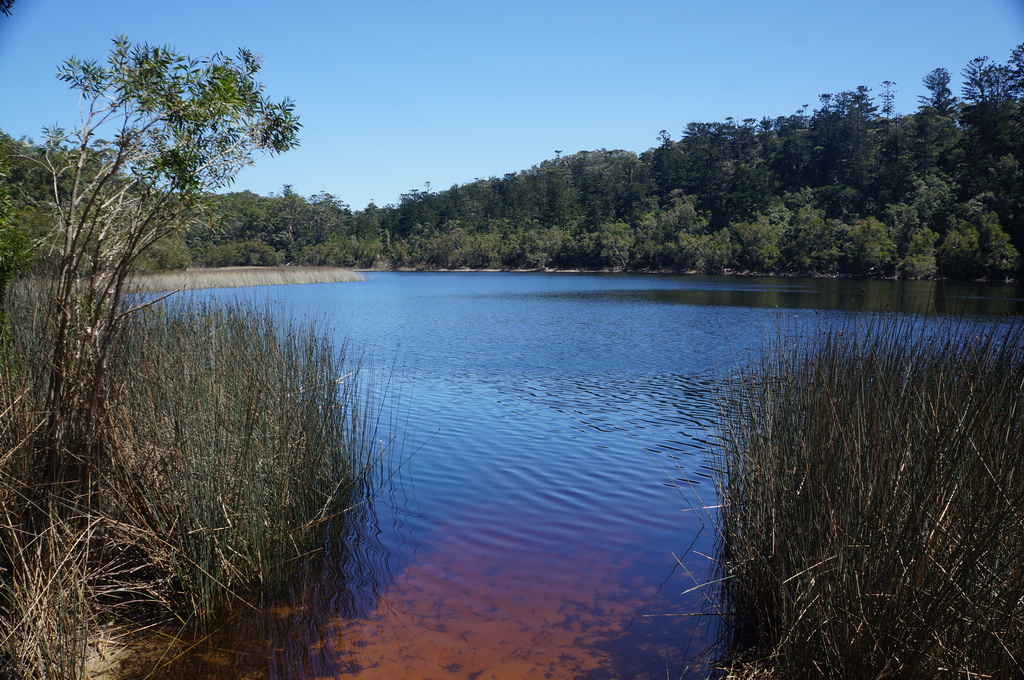
Further along was the first of the perched lakes; Lake Allom and Boomerang Lakes. Perched lakes occur when organic matter has sealed the bottom so the rain water doesn’t escape through the sand. Boomerang Lakes are the highest perched lakes in the world, although they were looking a bit parched. Lake Allom is nestled in amongst some quite stunning rainforest, which seems completely out of place on a sand island. The track winds its way between some pretty huge Kauri Pines and ring pines which assert their grandeur on all passing travellers.
We continued onto the Central Lakes track, and instantly became bogged trying to get off the beach. The sand was so dry and cut up by previous travellers that it was super soft, meaning our wheels started pushing bow waves of sand in front of them which they could not ride over and we sank. Some digging, and the first use of our ‘MaxTrax’ made easy work of getting out of our predicament, and we tried again, this time with a bit more speed and power, and we ploughed our way through and started ascending up a very steep hill. The track headed west and just about crossed the island before turning south; a few confusing signs later dropped us off at Central Station for the night.
We had stopped off at Lake Wabby along the way which is interesting because it is both a barrage lake and a window lake. A barrage lake is a lake formed by an advancing sand dune or sand blow cutting off a water source from reaching the sea, and a window lake is when a depression extends below the water table.
Central Station was the hub of the forestry industry on the island which has started in the late 1800s and continued right through until 1991. The wood from the island was particularly sort after for ship building and piers along the eastern Australian coast. The station consisted of a few workers cottages, sheds, administrative buildings and a small school for the few families who lived on the island. Situated next to a beautifully clear stream and right in the middle of the island, it looked as though it wasn’t a bad spot to be, though with all of these types of settlements, life was hard.
On our way back out to the 75 mile beach, we went to the most famous of the lakes on Fraser Island; Lake McKenzie, a beautifully clear, blue and still lake, and the largest lake on the island. The weather was hot and so a dip in the cool water seemed more than appropriate. The sand was beautifully white, fine and soft, we could have spent all day sitting there. In reality though we had tides to think about as we had made the decision to go back and camp up at the Mahino again, and needed to hit the tide such that it was low enough to get back up there but before the sun started setting. It was another lovely afternoon cruising on the beach to our Rolls-Royce campsite on top of the dune. That evening we celebrated 6 months on the road with a bottle of bubbles we received for our engagement 5 years earlier. The evening was gorgeous.


The next morning we were up against the tides again, needing to get all the way back down to the southern tip of the island where the ferry would pick us up before 10am when the advancing sea would make the southern headland impassable. We left early but ended up cutting it close for a number of reasons. The first was a short walk which got a bit out of hand when Marcel decided that he would climb to the top of Kirra Sand Blow, making it take a bit longer than expected, and the second was a Dingo, the first and only one we saw on the island, tucking into a dead turtle on the beach. The Dingo was seemingly unfussed of the cars stopping and having a gander at what it was doing, progressively digging the turtle out of the sand so that it could get into the shell a bit better.
Getting onto the barge was a little bit hairy as the beach was super soft, but we managed to save ourselves the embarrassment of getting stuck in front of the other 4WDs there, especially as we were first in line. It was both sad and a relief to be back on the ferry back to the mainland, sad as Fraser Island is somewhere I could spend a couple of weeks exploring and relaxing on, and a relief that our Troopy had tackled the sand well and not given us any issues. For that we treated it with an automated under-body wash back on the mainland to wash all of the sand and salt off it.
Well done Troopy, well done.

M