Margaret River Region
12 – 17 July
The wine Cellar in our vehicle has room for approximately 12 bottles of wine. This being the case, we need to re-stock the cellar at regular intervals to make sure we are appropriately prepared for those dinners which require a wine accompaniment. At this point in the trip we had depleted our stocks from the Barossa, Clare valley and McLaren Vale, so headed vaguely in the direction of Margret River. This took us from Wellington Dam to the thriving metropolis of Bunbury. This served the purpose of providing an information centre, a bakery for lunch, a book shop to peruse, a lookout tower to climb and a foreshore to walk, all in the 2 hour free parking provided for visitors. Having felt that we had seen what there was to see, we headed south along the coast to the holiday town of Busselton.
Busselton is a quaint little spot with a long jetty, I’m guessing it is bustling in the summer and a great place to spend a week with the family. When we were there it was school holidays, so there were a few families dotting the foreshore and taking the train down the 2km long jetty. Our car was booked in to get a chip in the windscreen fixed (damn roadtrains!) the next morning so we checked Wikicamps to see what our camping options were. Apart from the horrendously overpriced caravan parks there were a couple of other interesting options being the Anglican Campground, or the Mormon Campground. From the looks of it the local shire had given each religious denomination a small section of land along the coast 10km or so out of town, the Anglicans and Mormons decided they could make some cash off this and opened them up to the public at discounted rates. The Anglican camp was closed for July so we continued onto the Mormons where we got a sweet deal and set up for the night. Early the next morning the car was in the shop and we wandered through town.
The Jetty at Busselton used to be quite run down and a bit beaten up by cyclones, so the town banded together and raised money to rebuild the jetty and make a tourist attraction out of it. It is now the longest wooden piled (has a concrete top) jetty in the world. Given its tourist attraction status it also commands a fee to walk it, and even more to take the train. We arrived before 9am, and found that it was free to walk outside business hours so proceeded to freeze ourselves in the cold wind while plodding along its almost 2km length. There is also really good diving at the end of the jetty, but given that we were frozen out of the water, we didn’t really want to jump in, or haul our dive gear all the way out there!




That afternoon we made our way out to the western edge of the Margret River region to a small settlement called Yallingup. There we found this wonderful old hotel, built by the government in the 1900s for tourists coming to see the local caves, it was rebuilt in the 1930s. Inside its art deco interior was warmed by open fires, and a pianist and singer played French songs into the lounge rooms filled with happy people. We sat down with a couple of drinks and listened. A few mintues later an older man asked if he could join us and sat down with a bottle of wine, obviously enjoying the music. He was wearing a polar fleece jacket embroidered with the hotel’s logo, and it turns out he was the owner. It was nice to chat with him in that setting and find out about the place. He was a very active owner, chatting to all the staff as they passed by, and at one point discussing with the hotel manager the pricing strategy of the boxes of Corona for the next week. He obviously loved the building and bringing life to it in the form of live music.
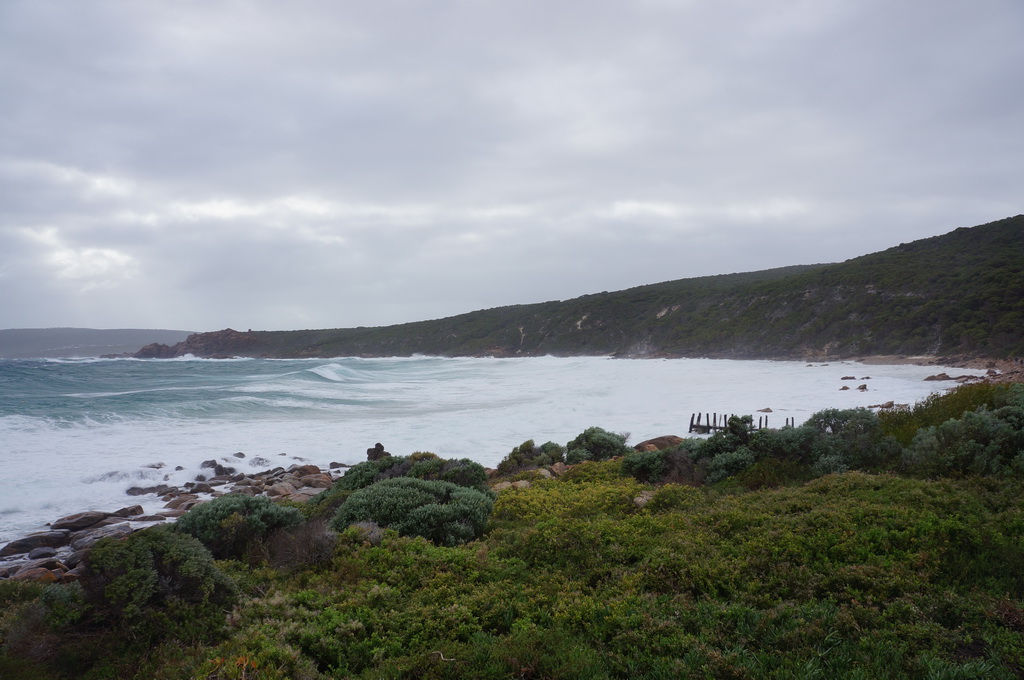
Over the next few days we zig-zagged our way through the Margret river wine region hitting two or three wineries a day, maybe a brewery, chocolate shop, ice creamery, artesian bakery, cereals and nuts, or olive oil makers, sampling the produce. We stayed in the national parks in the area (almost deserted camp grounds) and stopped off the natural and man-made attractions. The Cape Naturaliste lighthouse was first, a small but old lighthouse which sits at the north west corner of the region. Further down the coast was some interesting rocks out in the surf and then a strange rockform called the canal. This was generated by faults in the local granite aiding in the erosion of the rock in the form of a channel parallel to the coast. On a calm day it is a great place to go snorkelling and on a rough day good to watch the waves crash. We had the latter and walked out to the small wooden bridge over a side channel to watch.
The weather during those few days, and the days to follow was atrocious. It again rained and rained, making it good to sit inside when we could. We were getting about 35mm per day, and the rivers in the area were starting to show it. One morning it was pouring with rain when we woke up, so we decided to take it easy until the rain stopped. Over an hour later it was still pouring so we decided to go make breakfast under the awning. We found that there was a small stream running through what was effectively our kitchen, and eventually faced the fact that the rain wasn’t going to stop, so packed it all up in the rain. Drenched doesn’t even begin to describe it.


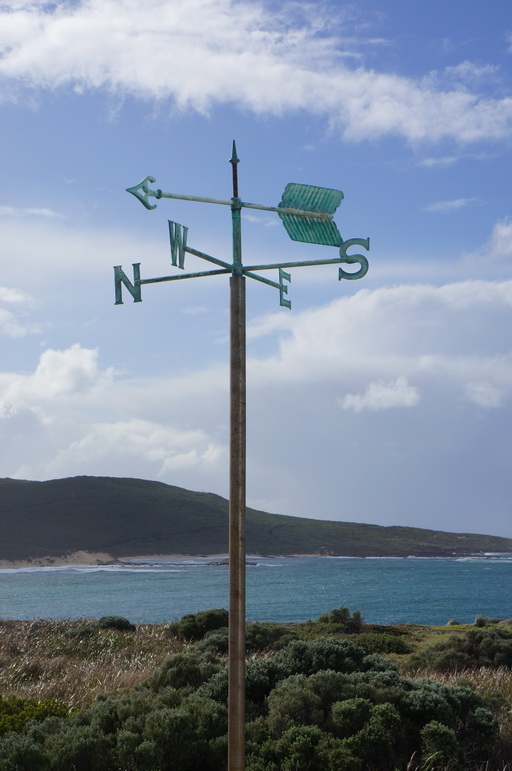
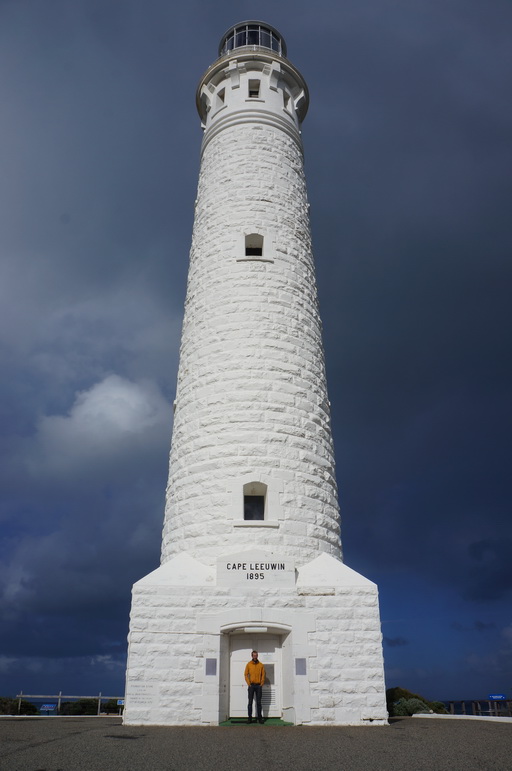


The final stop in the region was the lighthouse complex at the south western tip of Australia at Cape Leeuwin. This is where the Southern Ocean and Indian Ocean meet and is known as one of the most treacherous points in the world for ships due to the strong currents in the area. The lighthouse there was a beautiful example of a tall stone lighthouse. It still uses its original optics floating in a mercury bath, with modern motors replacing the clockwork for spinning and two 1000W bulbs for illumination. The climb to the top gave great views of the two seas meeting and to experience the howling winds whipping through the area. The rest of the complex included the three old lighthouse keeper’s residences, generator house, footings for the old navigation radio transmitters and a modern weather station. A very well put together audio tour tied it all together and made the experience very well worth the trip.
M