Kalgoorlie and Surrounds
26 – 30 June
The central south eastern part of WA has rich reserves of gold, both in alluvial form (nuggets on or close to the surface) or tied up in rocks such as seams or quarts underground. This area stretches from Norseman up through Kalgoorlie to Lenora and beyond. It has been mined pretty much continuously since the mid 1800s and, since we had nowhere better to be at the time, decided to spend the best part of a week checking it out.
Norseman: Norseman’s main tourist attraction is a set of corrugated iron camels Statues in the centre of a roundabout along the main road through town. It’s hard to believe, but when I asked the lady at the tourist info centre, she confirmed this fact. Second is a statue of the horse called ‘Norseman’ which the town is named after. The story goes that some settlers passing through stopped in the area for the night and tied up their horses. During the night, their horses kicked and scrapped the ground and Norseman uncovered a gold nugget hiding under the surface, and with this a goldrush was started. Given we‘d seen the top two attractions the lady then suggested we go have a look at the local museum, and gave the guy a call to open it up for us and another couple. The Museum was quite well done, and is what you can expect from a small town with a long history, rooms on the mines, home life, school, old medical and dental equipment and clothing. Of particular note was the local telephone switchboard which was in great condition, and the stalls and clock from their first courthouse, which was blown up, presumably by someone who wasn’t happy with a ruling. We then went to the lookout on top of a hill behind the town and, well, looked-out. The near-landscape was dominated by a massive mound of tailings from the local open cut gold mine, and in the distance a series of half full salt lakes which are usually dry.


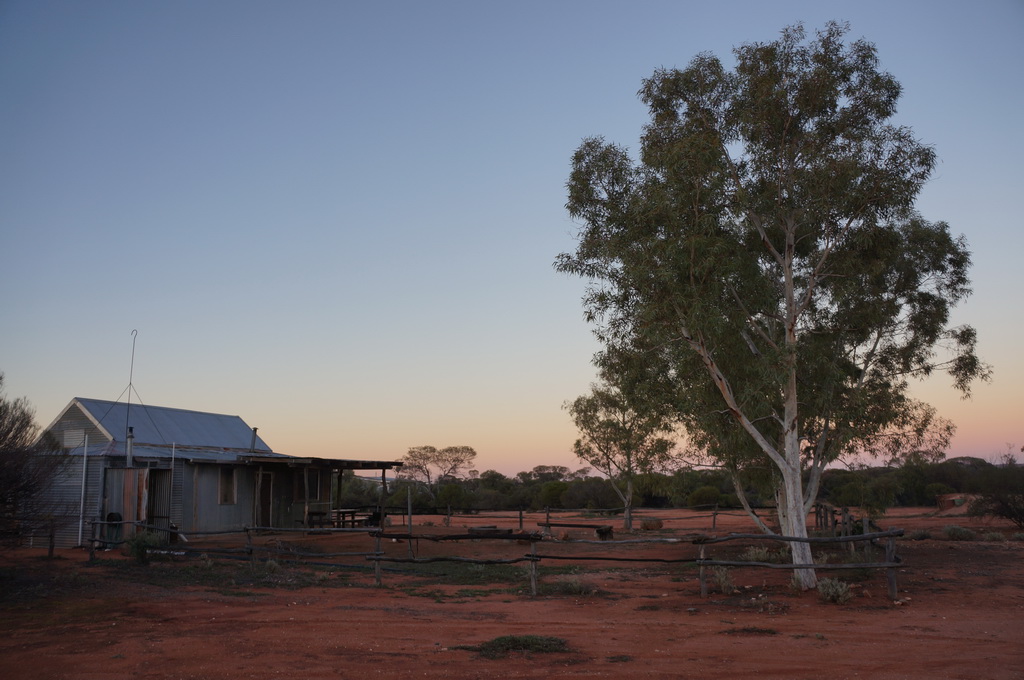


From Norseman we headed north to Kalgoorlie, stopping for a few things, then continuing on to Goongarrie National Park, an old station about an hour north of Kalgoorlie. There we camped behind the old shearers quarters, with a young inquisitive magpie we dubbed ‘Fattie’. The morning was the coldest we had woken up to so far, on account of the ice which had built up overnight on our awning and windscreen.
Onwards up to Leanora where the gold mine called Sons of Gwalia is. The mine still exists, now as an efficient open cut operation, leaving the small town as a ghost town. The old underground mine workings are now quite an interesting museum. Their claim to fame is the young, to be US President, Herbert Hover was the first superintendent there, though he only stayed for 6 months. For us the most impressive piece of kit they had was a huge 1000 horsepower steam winder which is used to haul the ore cars up the inclined mine shaft to the surface, and the huge timber headframe which sat at the top of the old mine shaft. After exploring their other exhibits, we went down the hill to the old town, which had been preserved by the local community and had a bit of a look around. Knowing that sunset was soon approaching, we made tracks back south to catch sunset at Lake Bollard.
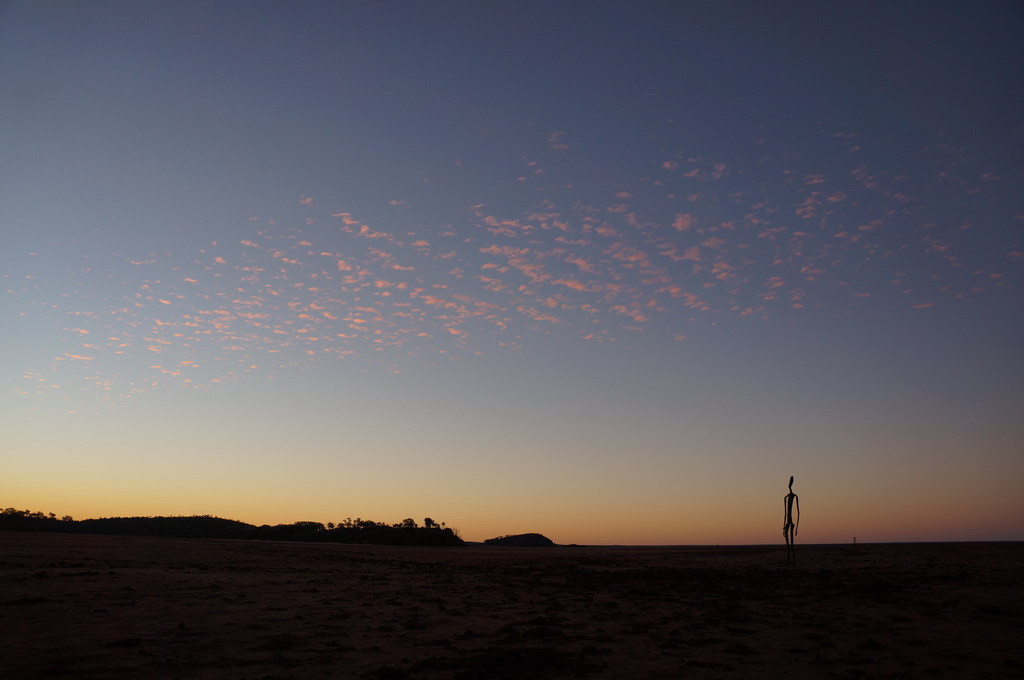
Lake Bollard is a large salt lake, home to an outdoor art installation called Inside Australia. Essentially the artist 3D scanned 50 local residents, played around with their forms in a computer, shrinking them by 1/3 and playing with their other proportions and cast them in bronze. The statues were then placed all over this lake, requiring the visitors to walk between each statue to admire it in its desolate surroundings. So there we were at sunset, expecting to see a dry, white salt lake in the middle of nowhere with statues, like in the photos, instead we got a shallow lake, with water over part of it and the rest red-brown mud. Oh well, we’re here, may as well take a look.
Sunset and sunrise are supposedly the best time to visit, for obvious reasons, so we decided to do both. The sunset was beautiful as expected and we were one of a few groups wandering from statue to statue trying to get the best show we could. The next morning we were up before dawn (just) and running across the lake to get to a statue before the sun poked above the horizon. We then wandered around the lake for an hour or so, venturing into the slippery shallow sections of the water to see some of the statues we didn’t see the day before.



Back down in Kalgoorlie later that afternoon we stopped in at the police station to report the loss of our numberplate, visited the info centre then headed down to the Museum for some history of the WA goldfields. Unsurprisingly another well curated museum of local stories and artefacts. Outside was a huge steel headframe from one of the earlier underground mines, now converted to a lookout, and underground, beneath the Museum, is a vault which displays 1/2 of WAs Gold collection, in various forms.
Kalgoorlie’s water is piped in 800km from the outskirts of Perth, and has been for over a century. The groundwater in the area is too salty for human consumption, and before the pipeline was built, the groundwater had to be desalinated by condensation. This, along with the needs of shoring up the mine shafts, desolated the forests around the area and as such there are very few trees in a 25km radius around the town. The Pipeline originally consisted of an underground steel pipe about 2 feet in diameter, with 8 steam powered pumping stations on route. Today most of the original pipe is still used, although sections have been replaced, and the pumping system now consists of 24 electric pumping stations.
The next morning it was time for our big ticket item for this part of the trip, a tour of Kalgoorlie’s famous ‘SUPER PIT’, the second largest hole in the world, and one of the largest gold producers in Australia. The tour allowed us to drive around the mine site (in a bus) in amongst the huge dumptrucks and see this incredible hole from a few angles. The ‘Super Pit is run by Kalgoorlie Consolidated Gold Mine which brought together about 29 underground gold mining leases in the area into a single entity and turned it into an open cut operation. The high grade ore is crushed and processed while the low grade ore is stockpiled for a time when the high grade ore runs out.


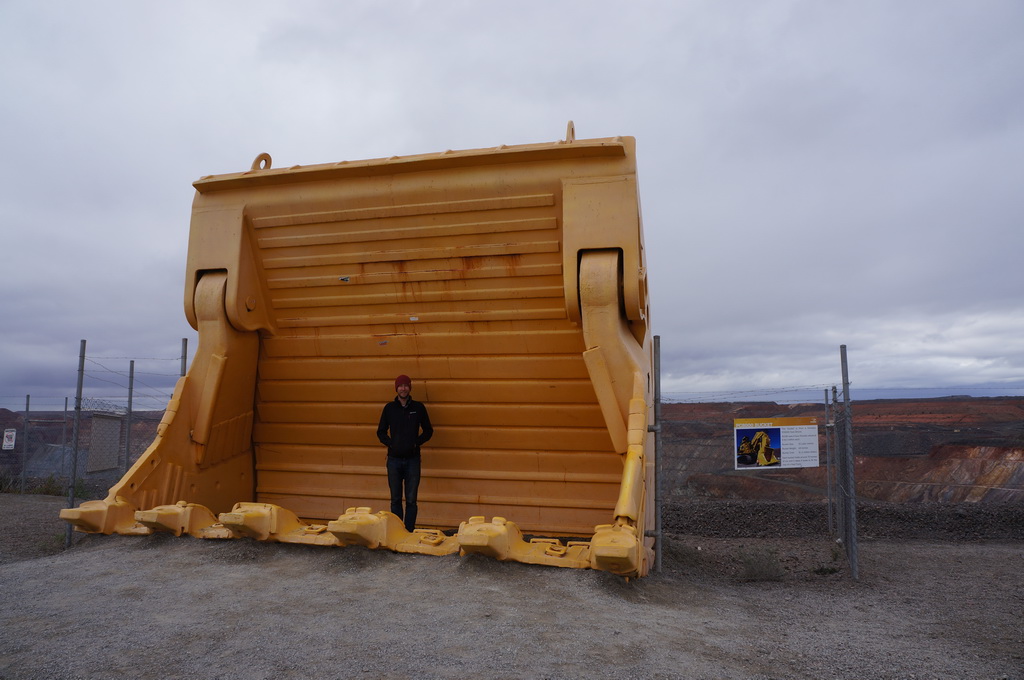


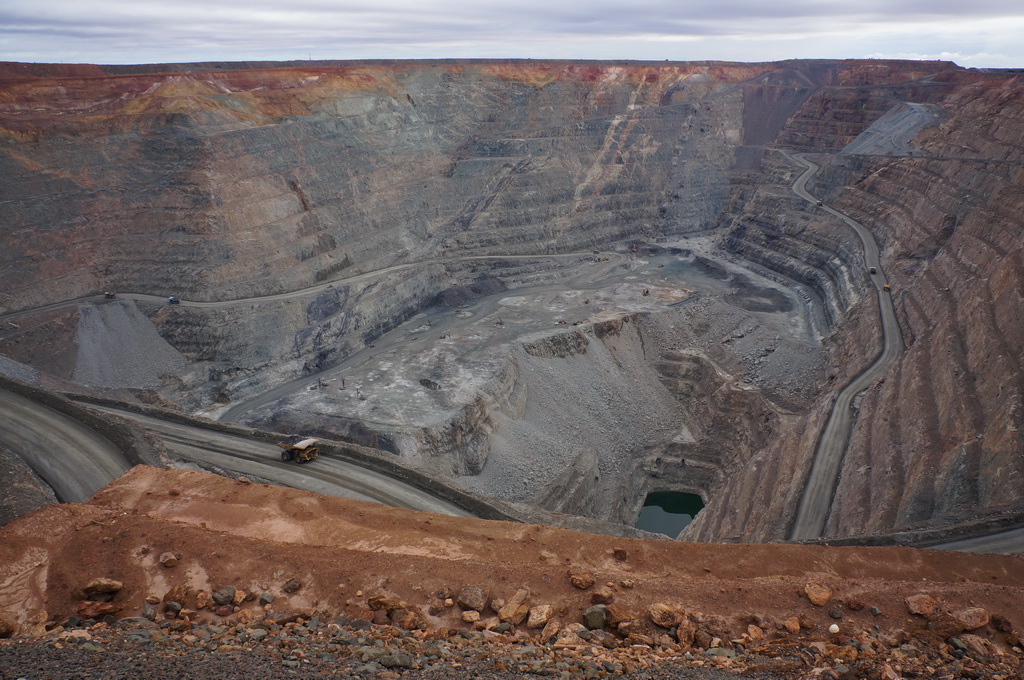


Seeing the pit up close (and from inside at one point) was a mind-blowing experience. It really brought home the value of this metal and to what extents people will go to get at it. The hole is currently 3.5km long, 1.6km wide and 600m deep. It takes the dump-trucks 45 minutes to bring 250 tonnes of ore from the bottom to the top, making about 14 trips in a shift. We also got to tour around the crushing plant, the three stage gold extraction plant, and the maintenance area. I’m actually surprised at how much we were able to see.
This concluded our tour of the WA goldfields and so we started to head south again after re-stocking with supplies and fuel. On the way back down to Norseman, partly due to wanting to take a different route, and partly to get to a free campsite, we went via Victoria Rock. Victoria rock is another granite rock formation which pops up about 50m out from the wooded planes 50km south west of Kalgoorlie. Here we spent the night, roasted a chicken in a camp oven and had a good fire, what would be our last for a while (though we didn’t know it at the time), before heading down a dirt road for a couple of hundred km to Norseman where this side trip started five days earlier.
M
Your photos are exquisite, and look best when clicked on to enlarge. This side trip certainly opened up new worlds!