Stirling Ranges NP – Wellington NP
6 – 11 July
After leaving the Fitzgerald River Biosphere behind we headed inland to the west to the Stirling Ranges, which has the highest peak in WA, Bluff Knoll at 1,095m. At the camp site we found large eucalypt trees and a large flock of very noisy cockatoos, the combination of which reminded us of the bush we were used to in Victoria. That night, as we weren’t allowed a camp fire again, we tried our hand at making a carrot cake in the outback oven, and to our delight, it came out better than any carrot cake I had made at home! Estelle now thinks there is an inverse correlation between the number of camp fires we have and the amount of baked goods she gets, less fire means more time for baking. We may have to test this theory some more.
In the morning we drove up to the base of Bluff Knoll, however there was a thick blanket of cloud enveloping the top of the mountain. Feeling a bit dejected, we discussed doing the walk to the top when we passed through the area on our way up to Perth a couple of weeks later. Since we were there however, we decided to do a short walk up to the bottom of the clouds to get some exercise. An hour and a half later we were standing on top of the windy peak, having walked for the last hour in white-out conditions in the freezing cold. Even though we didn’t get the view we had hoped for, it still felt good to have completed the ascent.


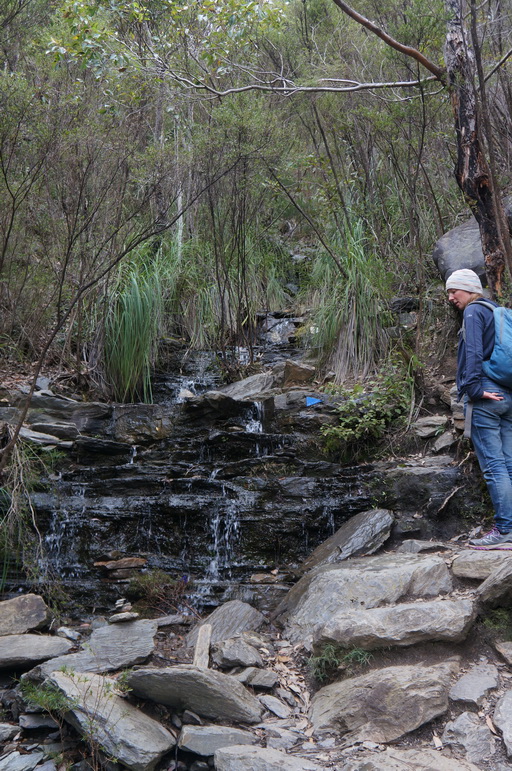


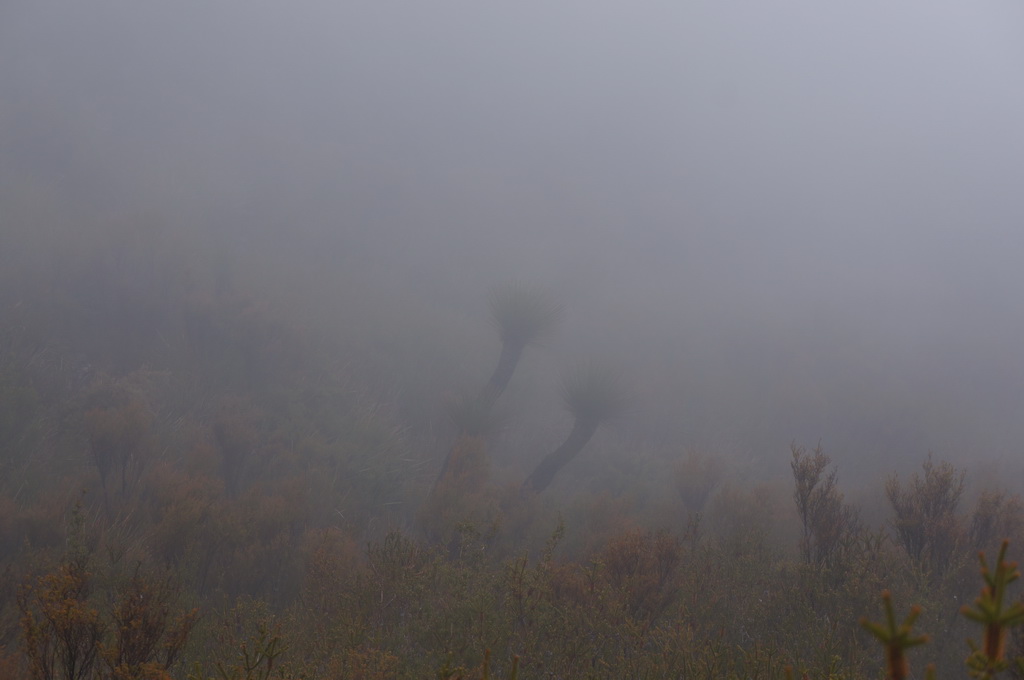


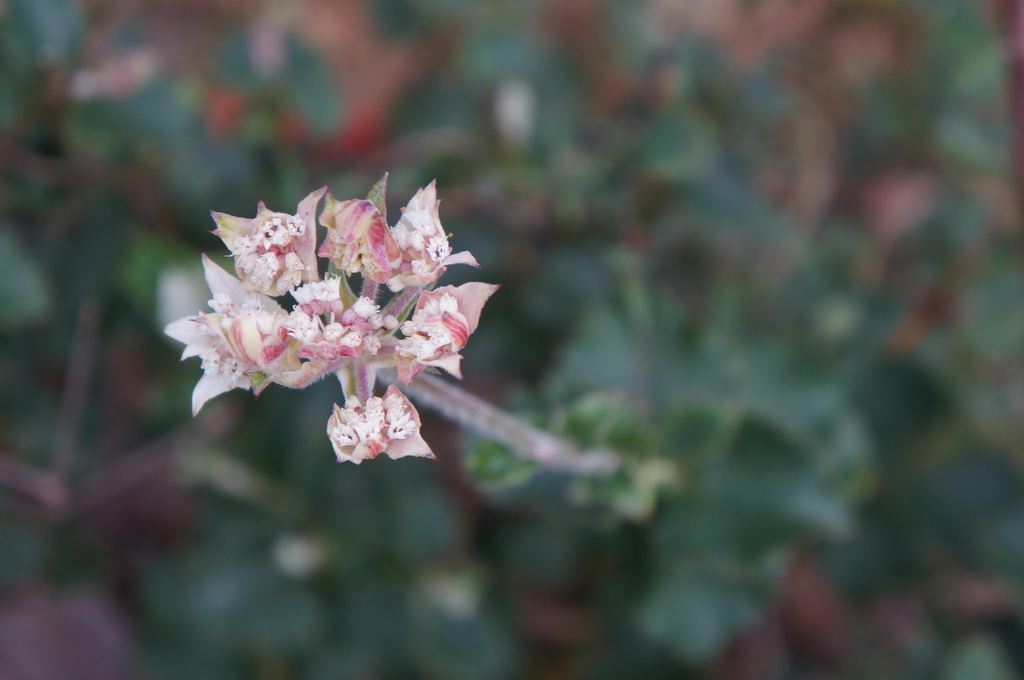
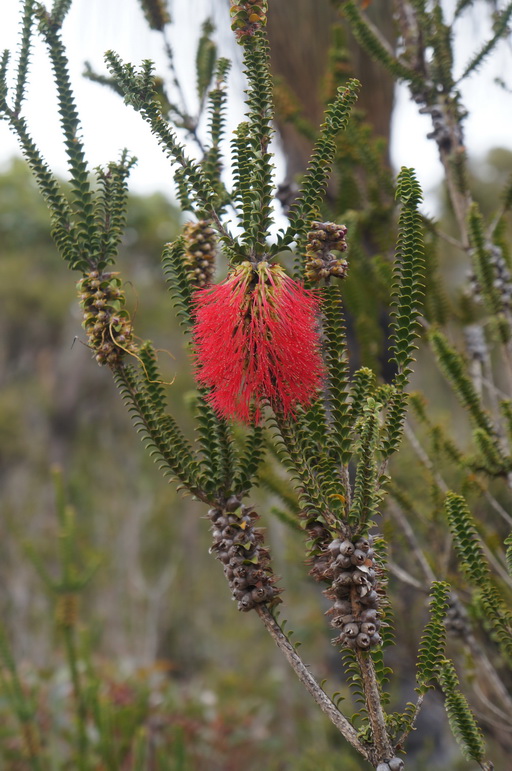

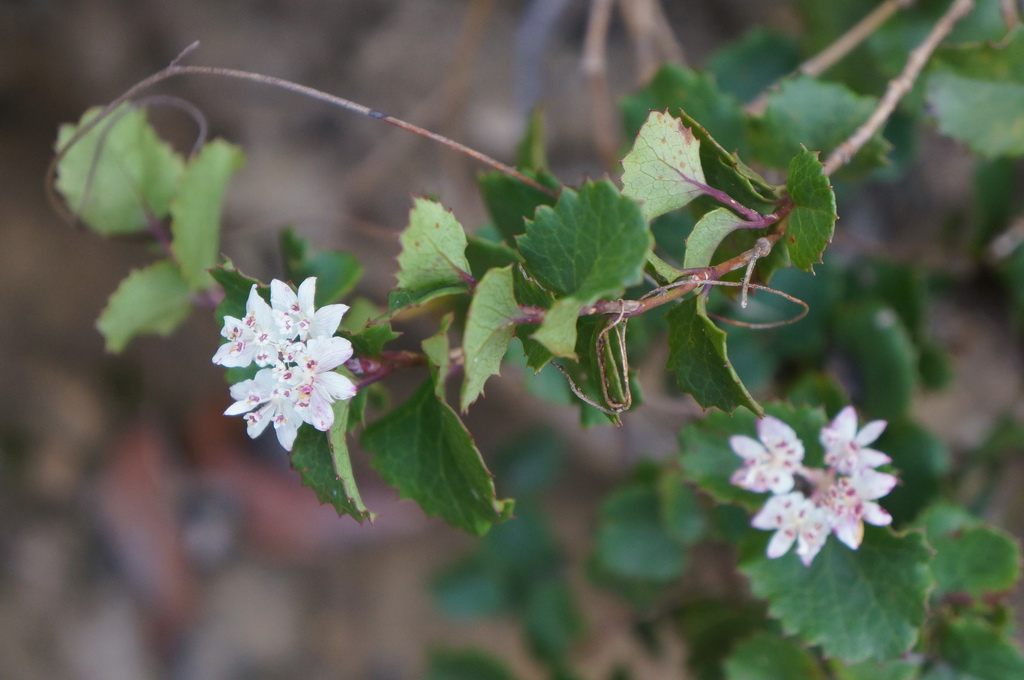


The Stirling ranges rise rather abruptly out of the surrounding wheat plains and run approximately 50km East-West. There is a dirt road which winds its way through the centre of them giving access to climb the peaks to either side of the road. Dieback (a root fungus spread by soil and water) is a problem in the area, destroying vast areas of diverse plant life, meaning that there are sections of the park which are no access to try and slow the spread of it, and areas already infected looking a lot more barren than they had 20 years ago.
That night we stayed at the Kendenup agricultural grounds where the local community have sectioned off part of the park for campers to use for a small fee to help raise funds for community projects, so we parked up next to the other caravan there and settled in for the night.
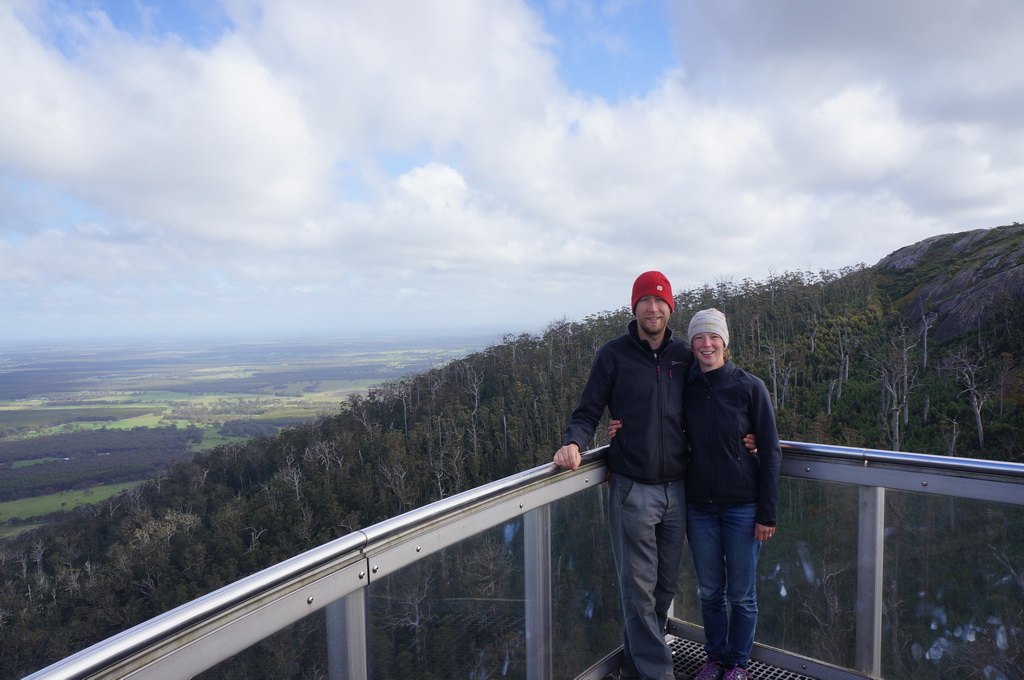
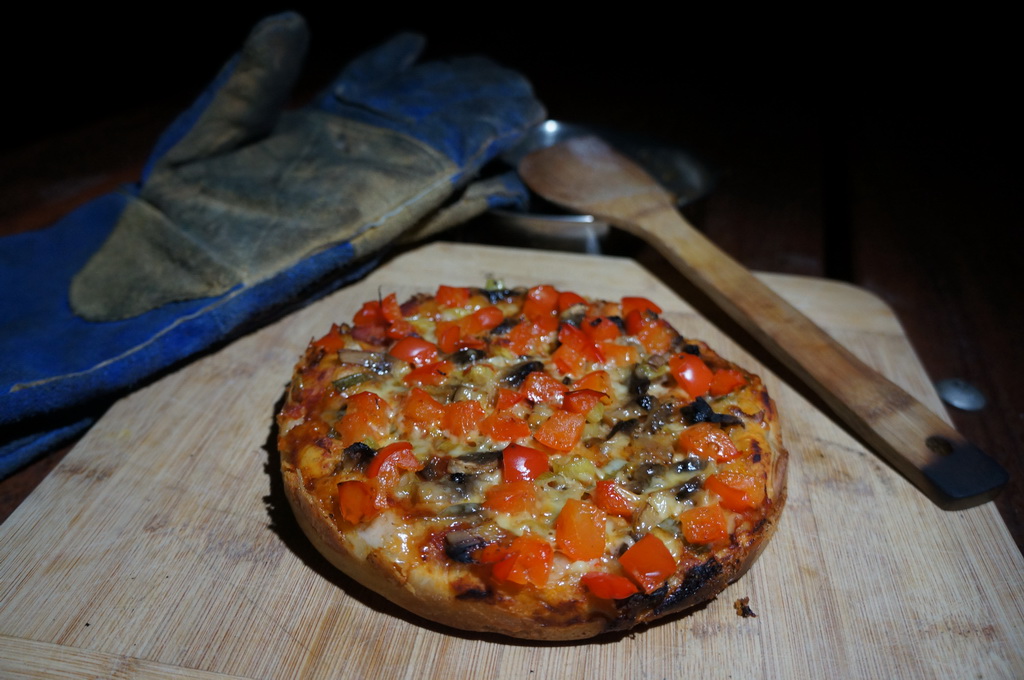
South of the Stirling Ranges is another set of ranges called the Porongurups with their claim to fame being the granite skywalk. Essentially it is a stainless steel walkway which, like a shiny stainless steel crown, runs around the top of a huge boulder on top of a hill. Billed as a great feat of engineering it has become quite the tourist attraction, and gives pretty good views of the surrounding farmland, and Albany in the distance. Estelle and I couldn’t help but notice that the 7m ladder up to the platform wasn’t quite built to Australian standards. You can take the engineer out on holiday, but they don’t stop being an engineer. We passed through Mt Barker to have one of their award winning pies, then on to Albany where we stayed the night in an overpriced campground due to it being school holidays. The strange thing is that there weren’t any school aged kids at all in the camp ground, just the usual bunch of grey nomads. Oh well, we took the chance to wash the car and went on to make pizza in the pizza oven and watch the tour de France till late in the evening. It was quite nice to blob out in front of a TV for a change.
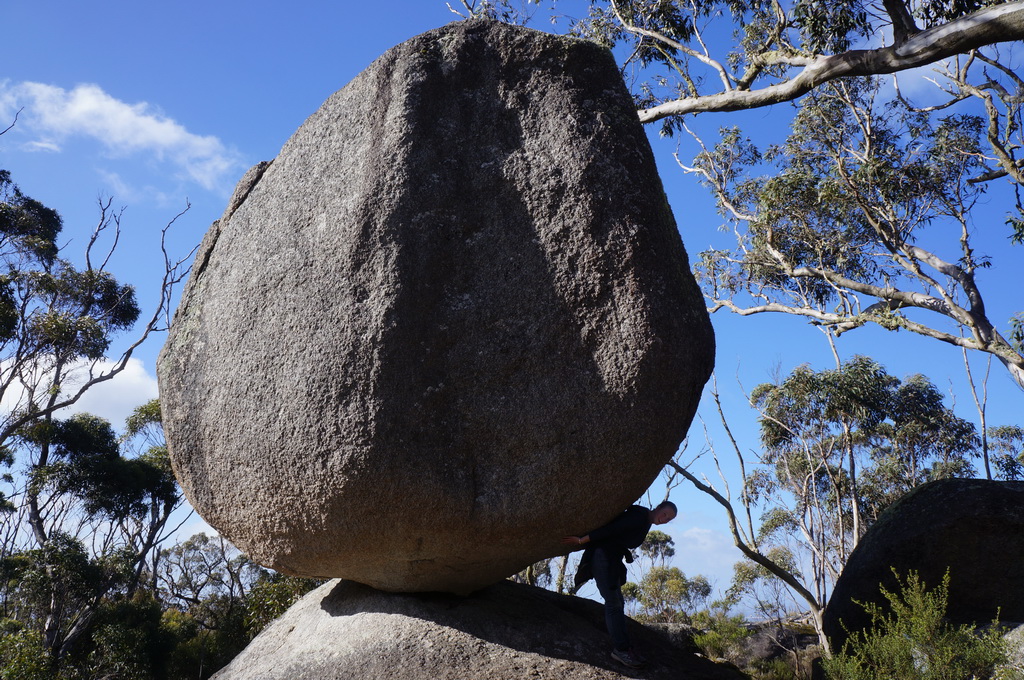

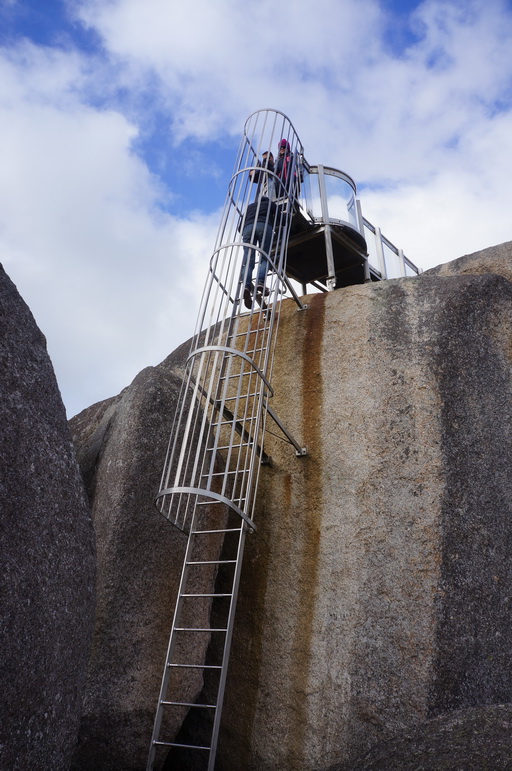
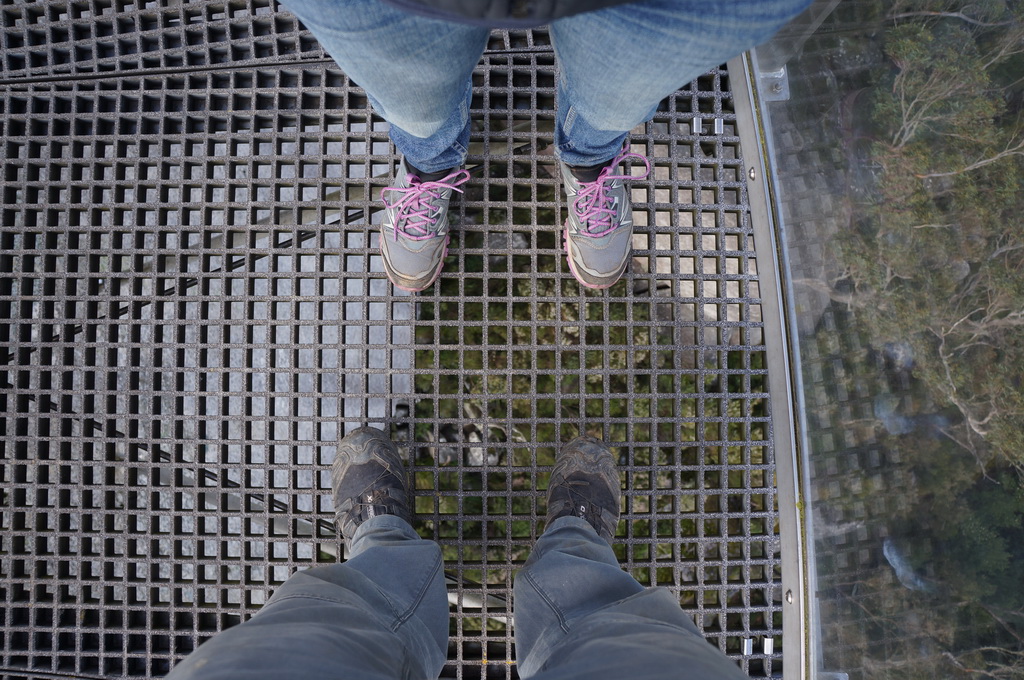



Albany is a neat little town, lots of history and quite a vibrant atmosphere. After bacon and eggs put on the next morning by the camp to raise funds for the Royal flying doctor service, and making friends with some of the nomads there, we headed into town to the farmer’s market and had a coffee in a café where we decided that Albany is somewhere we would return to in a couple of weeks and check out some more.
Back on the road and we headed north-west through the great forests of the great south west, and it rained, and rained, and rained. Eventually we found ourselves in a little town called Manjimup, still raining and bitterly cold, we picked up a coffee and wandered through the deserted streets (Sunday afternoon) until we found a pub. The smoke coming out of the chimney enticed us over, and the promise of $8 pints drew us in. Sitting by the fire we sat on our phones, planning what we would do next, and a little bit of what to do with life in general. The beer helped with this. Eventually we forced ourselves to turn our backs on the fire, warm them, then walk back outside (it was 2 degrees out there) and find somewhere to camp for the night.
Manjimup was founded on the timber industry in the local area felling huge Karri trees and turning them into either timber, or wood chips. If you ask me wood chips was a bit of a waste for such amazingly grand trees, but that is what they did. They had a museum to display their local history, but that was ‘closed until further notice’ so wandered the grounds playing on the old steam locomotive and bulldozer. They had also just installed a new children’s playground, which included the tallest slide I have ever seen, it must have been 5 stories high. I had to go on it, but had to wait till the kids on it had left, so I wasn’t that creepy 30 year old sliding down the slide with the kids. Lets just say that the slide was good, but not great. Being brand new, and made of stainless steel, it was a bit sticky, so we were unable to get any decent speed up, but it was still fun.
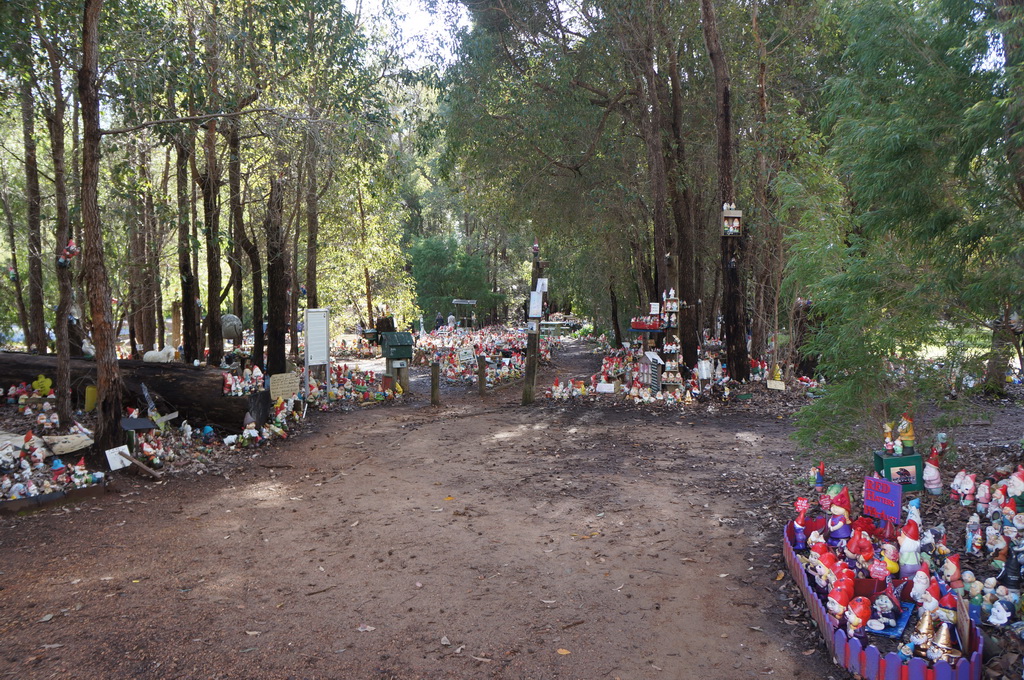
We continued up the highway until we reached the Ferguson Valley, known as a wine region, but we were more interested in the two small breweries there. Also in the Ferguson valley is a little place called Gnomesville. The story goes that a lady once put a garden gnome on the centre of the roundabout in the intersection of three roads in farmland. Slowly, more and more gnomes started to appear. After a while there were too may gnomes in the roundabout and they were moved to the side of the road, and to eliminate the traffic hazard they had become. As their fame continued to grow more and more gnomes were added, until now there are thousands, if not tens of thousands of garden gnomes lining the street. If there is ever the definition of something getting out of hand, this is it.





That afternoon we found ourselves in the Wellington National Park in a campground which had only been opened a few days prior. Set in amongst the Marri trees on the banks of the low level lake the sites were well spread out, flat and each had a camp fire. The best part about it is that they had to fell a few trees to make way for the camp sites so there were large piles of fire wood next to most of them. This was to keep us warm for the next couple of days.
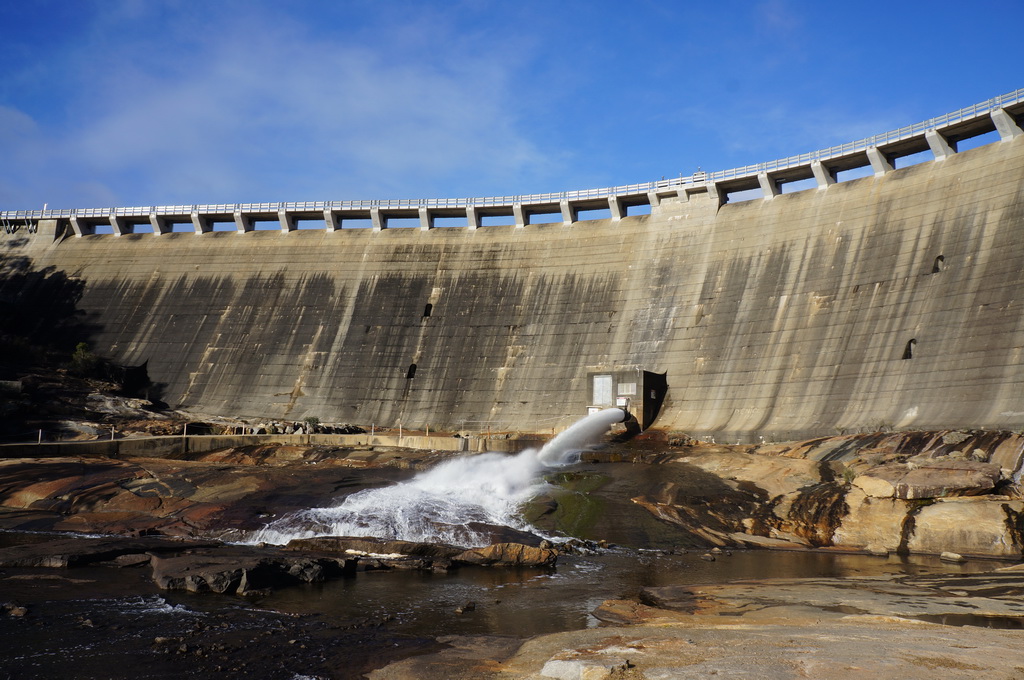
We had a stationary day the next day to take advantage of the good camp site, reasonable weather (only cold, not raining, much) to do some work on the car and fix some stuff which had broken, and walk down to the dam and local kiosk. The dam was originally built in the 30s to provide irrigation to the local farmland, then extended a few meters up some time later, then again another 15m to provide drinking water to the close by towns. Unfortunately farm runoff caused the salinity of the water to rise to a point where it was no longer suitable to drink. These days it appears that the water level is kept low, enough to supply some irrigation and the small hydro power station it also feeds.
now, off west!
M