Coral Bay – Exmouth
8 – 14 August
We continued our trip north with a long day of driving up to Coral Bay (~550kms). We stopped off in the town of Canarvon for lunch and checked out some of the local sites including the old jetty at the mouth of the Gascoyne River, and a couple of old radio telescopes including an unusual early sugar scoop model. We didn’t have too much time to linger as we need to keep pushing north.
Mid-afternoon we turned off National Route 1 and headed towards North West Cape. Along the way we crossed the Tropic of Capricorn – now we really are ‘up north’. We were fortunate to spend a week around the Ningaloo / Exmouth area – 2 nights in Coral Bay, 1 night at Bullara Station at the base of Exmouth Gulf, 2 nights in Cape Range NP and a final 2 nights based in Exmouth itself. Reflecting on our time, our experience could be summed up by the three elements of water, earth and sky.


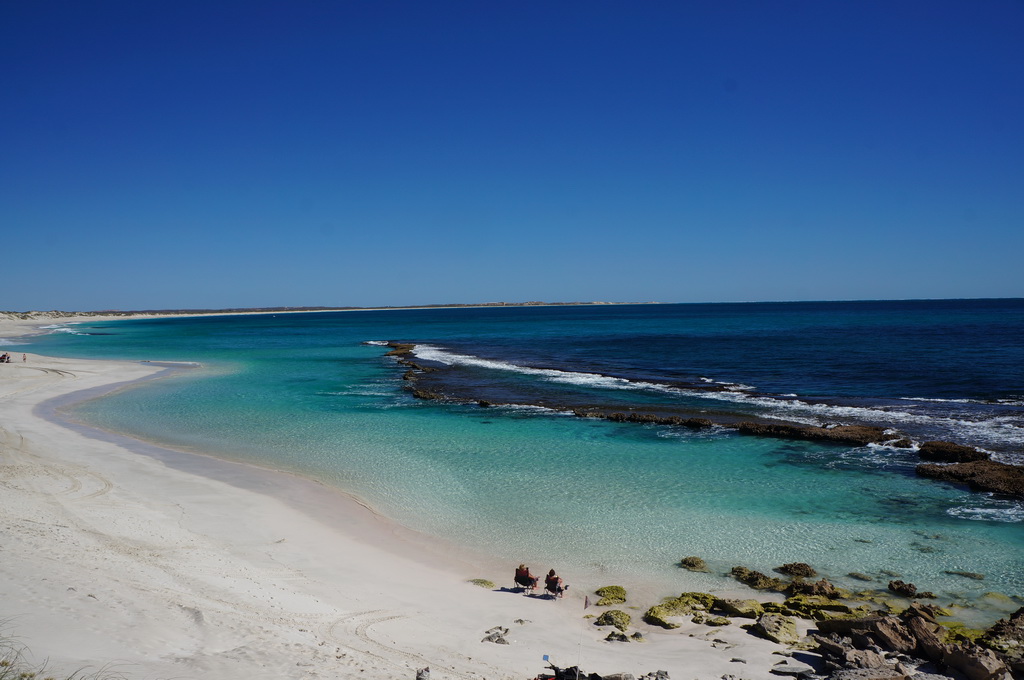


WATER
Ningaloo Reef – Ningaloo reef is the closest fringing reef in Australia and stretches 300kms often starting just meters from the shore. The warm Leeuwin Current sweeps down the west coast feeding the reef with warm water. Starting so close to shore it is easy to snorkel on the reef. We snorkelled a couple of times amongst our diving. We took a sandy 4wd track north from Coral Bay and headed to a spot called Oyster Bridge. It was a bit eventful getting there as we negotiated soft sandy dunes but we were treated to a school of silver fish.
The second snorkel we did was a drift snorkel at Turquoise Bay in Cape Range NP. Here the slow current let you drift over coral bombies. There were lots of interesting corals and reef fish, including a large anemone with lots of resident clown fish. It took a while to get used to this snorkelling thing though – working out that you couldn’t just go up and over some coral like we are used to diving, or turning yourself upside down to get a better look at something and still expect to be able to breathe!
Diving – We treated ourselves to two days of diving, one out from Coral Bay on the Reef, and the other from Exmouth at Lighthouse Bay at the top end of the reef system. It was great being in the water again, and we were quite pleased that we had our 7mm wetsuits with us as you certainly started noticing the 22deg water by the middle of the dives.
The dives from Coral Bay were on the outer reef. They were typical reef dives with lots of corals and reef fish. One of the dives had a large cabbage coral which was a fish cleaning station where we saw five grey tip reef sharks cruising around. In the middle of the dives they also included swimming with a Manta Ray. There is a big sandy bay inside the biggest gap in the reef where there are resident coastal manta rays. When we were out we went swimming with ‘Whoopi’ a 4m ray with a black underside. She was super chilled cruising along at a depth of 6m quite happy for us to be swimming along behind. It was very neat to see a manta so gracefully swimming whilst we were kicking along at full steam just to keep up.
Unfortunately Navy Pier in Exmouth, rated amongst Australia’s best dives, was closed with the pier needing repairs. Whilst the tourist info suggested it may be open again mid 2016 the lady in the info centre advised that the Department of Defence hadn’t even gone out for tenders yet so sounds like it will be out of action for quite some time. Instead we decided to join a dive boat for a couple of dives at Lighthouse Bay.
The dives in Lighthouse Bay were quite different with more varied fish life around. Sometimes the viz was effectively only a metre or so as we swam through curtains of sprats. We saw our first sea snakes; a little unnerving especially when during the brief the guide had warned that they sometimes like to wind around divers’ legs. We were also treated to swimming turtles which we hadn’t actually dived with yet. We also saw Wobbegong Sharks, Lion fish, pipe fish, mackerels, and groupers to name a few. A very enjoyable day out.
Whales – Ningaloo Reef is famous for the large marine life that regularly pass by on their annual migrations, in particular Whale Sharks cruise by over winter. Unfortunately we were a bit late for Whale Shark season and whilst places were still claiming there were some around we didn’t like our odds of actually seeing one. We were however in Humpback Whale season, and they were there in abundance.
You could spot Humpback Whales from any vantage point with a view out over the ocean: either the tell-tale spray plume, a flashing flipper as they slapped the water, or a couple of times the briefest of flashes of white as they breached, only to disappear again as you then spent the next 5 mins intently watching that patch of water.
Our best experience of the Humpback Whales came as we were on the Dive Charter boat cruising out to Lighthouse Bay from Exmouth. Just as another guy on the boat was saying that he’d never seen a whale breach, a whale promptly broke the surface some a couple of hundred meters from the stern of the boat. This whale was quickly joined by another and the two of them continued playing for a while. It felt pretty special having seen this, but then a short while later we were treated to another two whales breaching a bit further away from the boat, but this time they were fully jumping out of the water. To the accompaniment of whoops of joy from all those on board we watched these whales having a great time as they continued to breach over and over again. The sight of two whales both fully out of the water at the same time is such a clear snapshot memory for me. What a special treat!!
We could even hear snippets of whale song as we were underwater diving at Lighthouse Bay – a magical sound.


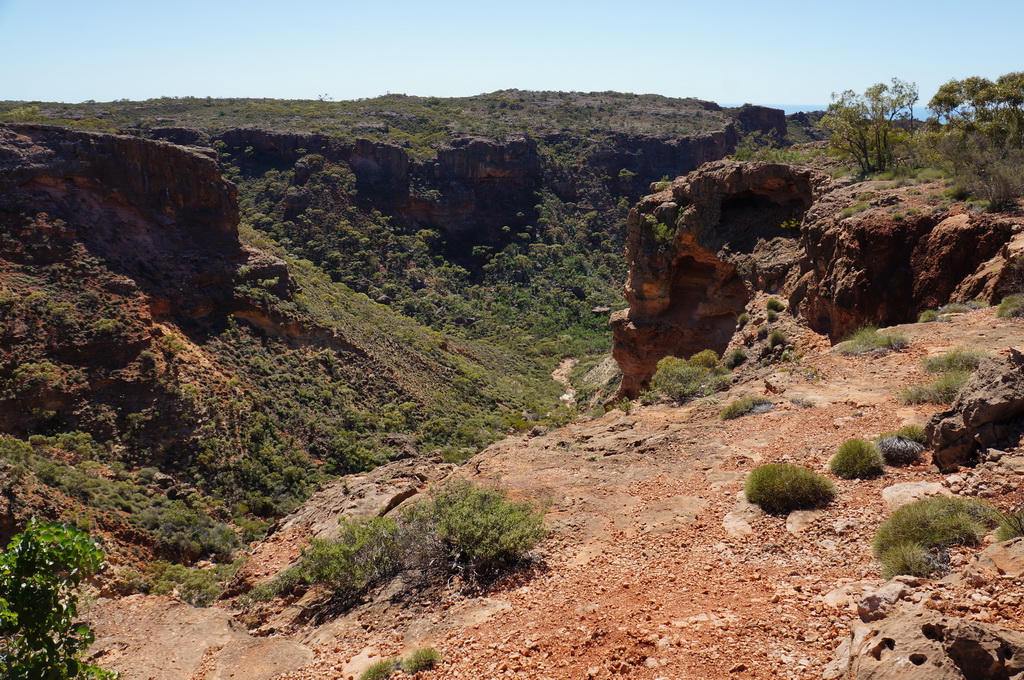
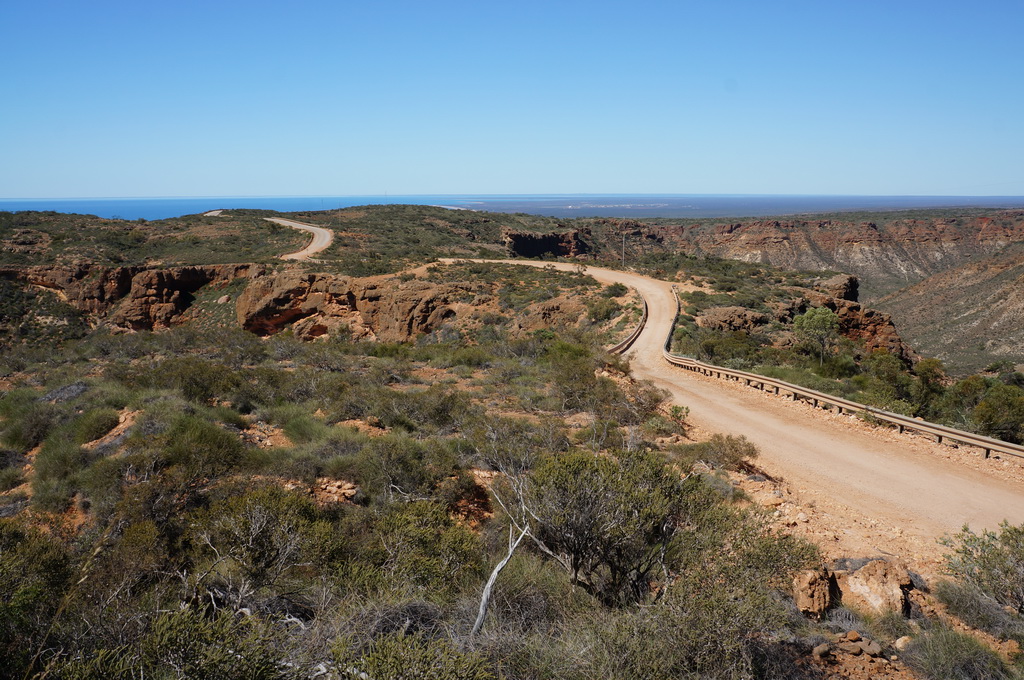
EARTH
Cape Range NP – Bordering the Ningaloo Reef down the western edge of the Cape is Cape Range NP. A low range to the East flattens out to flat coastal lowlands covered in scrub and grasses before being edged with sand dunes. Cape Range NP is one of the few NPs in WA that you now need to book sites in advance. We were able to get a couple of nights at two different campsites which let us explore the length of the park. Our first night we were down at Yardie Creek at the South end of the park, and our second at Kurrujong in the middle of the park.
At Yardie Creek we walked up around the small gorge framing a permanent body of water. Here we saw lots of wildlife including some black-footed rock wallabies and an Osprey perched on the far side of the gorge. Another walk we did was up Mandu Mandu Gorge a gorge filled with river stones, but after climbing up the sides we were treated to great views out over the reef and Indian Ocean beyond.
Bullara Station – As something different we stopped off at Bullara Station for a night between Coral Bay and Exmouth. Bullara is a cattle station that worked out that they could supplement their income with all the travellers and set up a bit of a campground area. I think a number of stations have done something similar especially after they were hit with the live export ban and a couple of cyclones a few years ago.
From 5pm they had a batch of damper served around the campfire which was a great way to say hello to fellow travellers. It was the tastiest damper I’d had and they kindly had copies of the recipie as well as a poem written by the resident caretaker to take home. We’ll have to give it a go when we’re allowed campfires again. The best part for me though was the outdoor bathroom, and having a warm donkey fired hot water shower in the fresh air.
Coral Bay & Exmouth – Coral Bay is essentially just an oversized caravan park. It has two caravan parks, a couple of shops and a resort forming the township. But it was busy! We hadn’t booked ahead at all, and managed to get the last overflow campsite opposite the caravan park. We decided that it probably suited us better as there was a bit more space for everyone on the grassed area, whereas the main park was packed tight as sardines. We were in Coral Bay for the 2016 Census – it felt a bit odd having to state that we weren’t currently employed which promptly halved the number of questions that we needed to complete.
Exmouth felt a bit like a town built for a purpose, which it was. It was built in the 60’s to support the construction of the VLF Antenna, although now its economy is based on tourism. We stayed at the RAC Caravan Resort and made the most of staying at one of those ‘R-word’ places hitting the swimming pool each afternoon. Exmouth is known for prawns – it even has a giant prawn to prove it, so we decided to treat ourselves to a feast of Garlic Prawns one night. A great dinner, although the prawns themselves were from further south in Shark Bay as a cyclone from a couple of years ago really affected the local fishery.


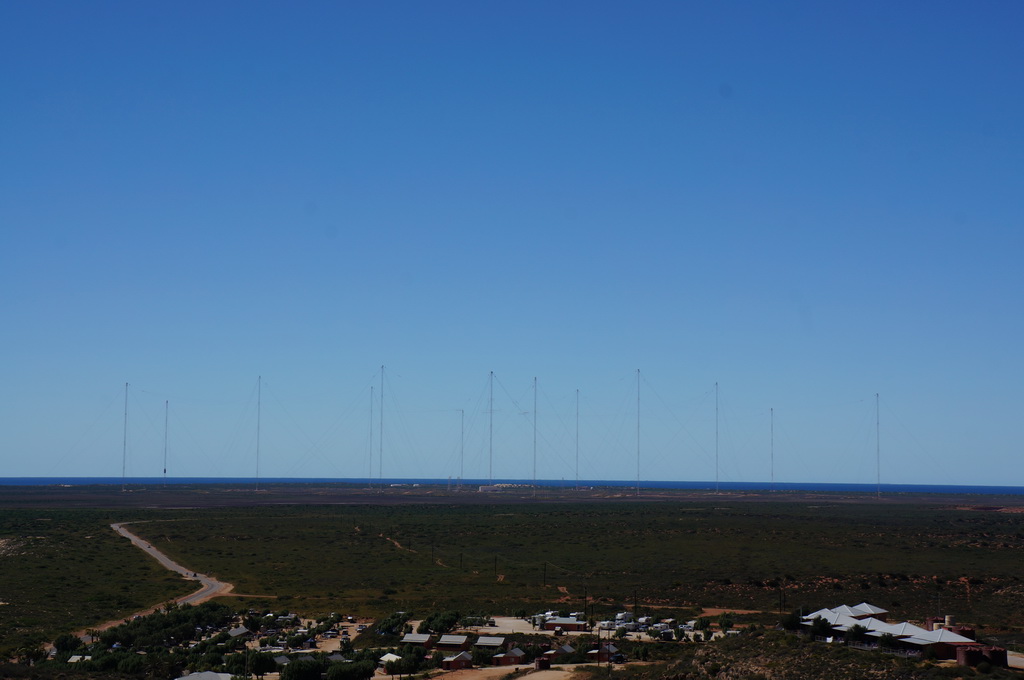

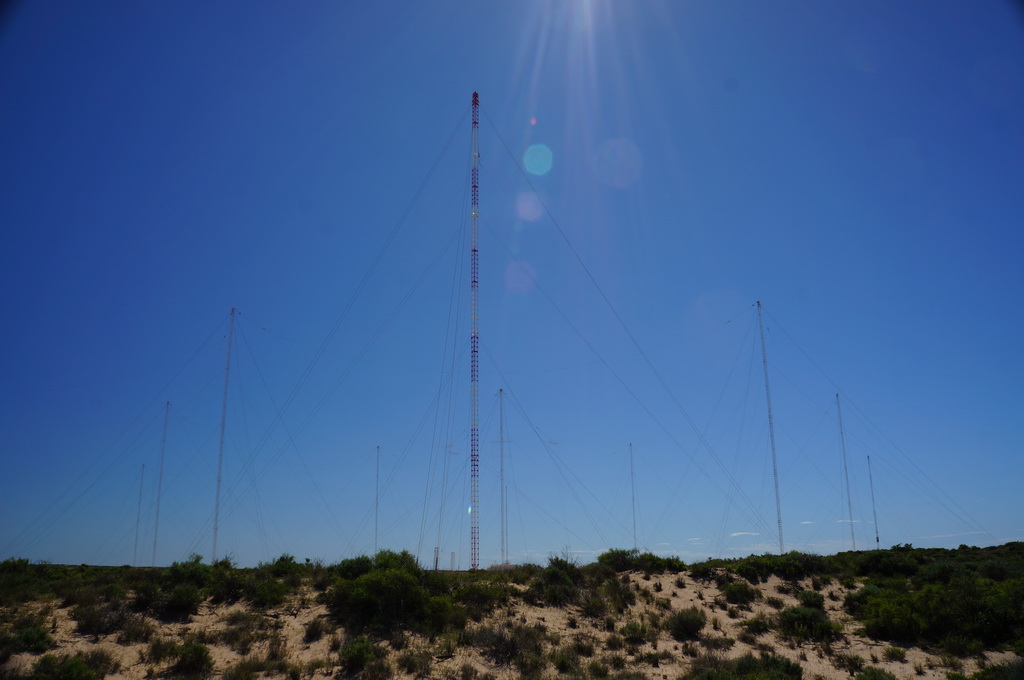
SKY
VLF Antenna – Dominating the skyscape at the top of North West Cape is the Very Low Frequency (VLF) Radio Transmitter and Antenna System. There are 13 towers in total – two circles of six around a central Tower Zero. The system is the second largest structure on earth: the diameter of the outer ring is 2.5km, and Tower Zero is 387m high – higher than the empire state building. It was built between 1965 and 1967 and plugged a gap in the communications network for the US nuclear submarines as the Cold War heated up. It is still in use today, though less so given newer technology is available.
Solar Observatory – South of Exmouth township is one of the few observatories dedicated to watching and studying the sun. From the big blue sign on the road we could see that they had two optical and two radio telescopes, but what they also had was a big sign down the access road telling us not to trespass, oh well, there goes that idea.
E