Cooktown to Cairns
14 – 19 October
Being finally back somewhere which resembles civilisation, we’re going to have to start getting used to people again, more traffic on the roads, more people in the campgrounds, and just generally more European backpackers wandering around. Civilisation does have it’s benefits however; fresh milk is easy to come by, fuel is cheaper, distances between towns or points of interest are less than 500km, and we won’t have to be as organised in terms of having enough food and water to last two weeks.
I found Cooktown a fascinating place, and following the very good museum the day before I was more than keen to travel back in the next morning to discover more. We visited the place were Cook beached the Endeavour to work on the hull and the hill where he surveyed the ocean to try and find a safe route through the reefs back out to the ocean. We even went and stood on the steps where Queen Elizabeth disembarked her vessel last time she visited. The local markets were on so we supported the local community by buying some produce and smoothies then went to the oldest botanic gardens in Aus and walked over to the bay on the ocean side. They say the gardens were originally set up to stem the sprawl of the Chinese market gardens during the gold rush of the 1800s, but this is hotly contested apparently. The most interesting plant in the gardens to me was the fox tail palm trees. These palms were discovered up on Cape Melville north of Cooktown when they were brought to the attention of botanists by a local Aboriginal man. This sparked a craze of people wanting this tree in their gardens and the tree was almost wiped out in its home range by people poaching it. Sounds strange but it’s true. From then on we have seen it everywhere; it mostly looks like a normal palm tree but the fronds resemble the tail of a fox, quite cool.
Not quite ready to leave the dirt roads behind, we took the Bloomfield track from Cooktown to meet the tourist traffic at Cape Tribulation. The Bloomfield track must have been a super rugged road back in the day; running along the coast for 34km up and down some pretty steep hills, climbing and dropping 130+ vertical meters each time. The steepest parts are now concreted, but the Troopy still crawled up in first most of the time, getting a little hot in the process. What an awesome road, and a great way to say goodbye to the dirt in the tropical north.


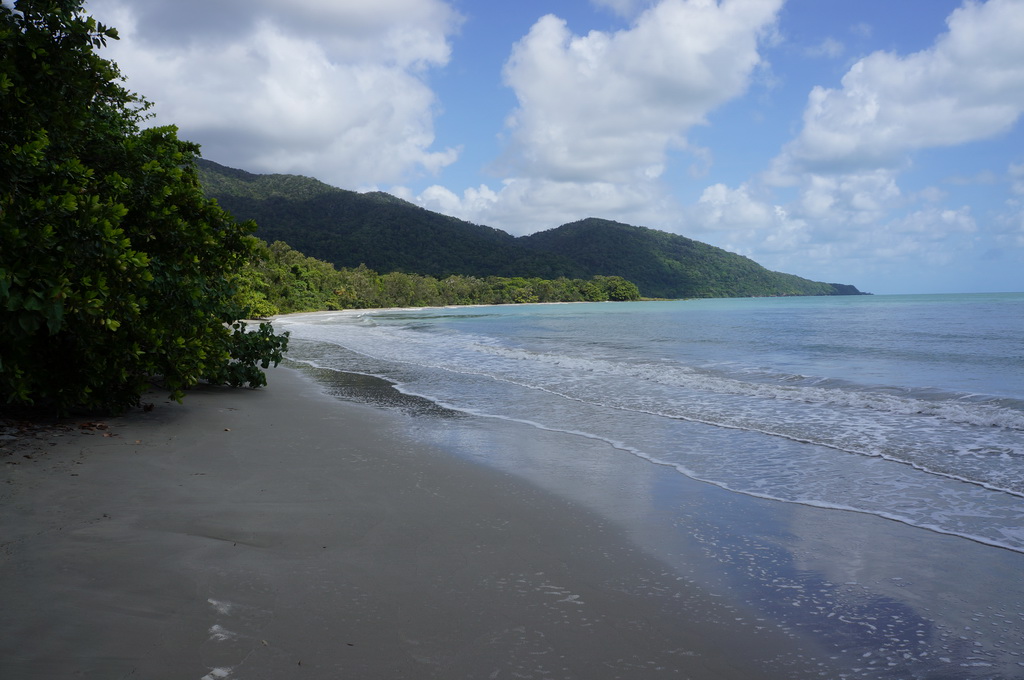


The Daintree rainforest is something to behold. The very old rainforest covers the steep hills and lowlands next to the coast with thick vegetation of trees, vines, mangroves, ferns and probably hundreds of different plant species. Parasitic plants nestle themselves in the forks of trees and make the most of the sunlight up high and nutrients of falling leaf litter. Every now and then the native fig tree can be seen strangling its host tree until it can stand on it’s own and the other tree dies and decays away. All of this to the tune of bird calls and the rustle of leaves caused by little (and big) lizards running away from us, or brush turkeys scratching around to find the next morsel.
Across the wide Daintree river on the reasonably priced ferry, Estelle getting excited about only having to get a one way ticket this time, we re-traced our tracks from a few years before into Daintree village and Port Douglas (the latter to get some fresh prawns for dinner), before finding ourselves in Palm cove.
Over the last couple of months in the north, we have collected our fair share of red and grey dust inside the vehicle, it coats everything! Partly from coming in our front windows as we tried to keep cool, and partly from it sneaking around the seals in the rear doors and windows. We decided it was time for a clean out given most driving would be on sealed roads down the east coast. Everything was emptied out and we went to town with chux cloths and soapy water to clean the dust from every nook and cranny. It’s nice to have a clean car again.
To round off this part of the world we embarked on a journey to Kuranda from Cairns on the Kurunda Scenic Railway, a feat of rail engineering from the late 19th century to get reliable access to the tablelands inland and the associated goldfields. The trigger for the construction was a very bad wet season cutting off the pack horse track off and thus the near starvation of thousands of people in the area. The rail winds its way up Stony Creek and Barron Gorges passing through 15 tunnels, many large ledges and cuttings which were all created by hand by a workforce of 1500 immigrants. Their crowning glory is the steel latticework viaducts, most notably the curved viaduct which passes in front of stony creek falls.


Kuranda itself is a bit of a tourist trap of a town to be honest, but at least the tourist rail and ‘Sky Rail’ keep it humming and it does have a number of reasonable attractions to keep people busy. We selected the Australian Butterfly Sanctuary, and are really pleased we did. Like most butterfly places they have a large netted enclosure, but this one was absolutely jam packed with fluttering creatures. They breed all of their butterflies and moths on site which is a full time job for about four people. They collect the eggs laid by the butterflies every 90 minutes during the day and take them to their sterile lab where they hatch them, grow the caterpillars until they go into their cocoon and then select the best ones to go into their breeding enclosure, while the rest get released into the public enclosure. In the wild a butterfly egg has a 1-2% chance of surviving to become a butterfly, mainly due to diseases and parasites present in the tropical north, but at the sanctuary they boast a 80-90% survival rate. The Cairns Birdwing butterfly was the largest one they had on show when we were there, about 12cm across it is endemic to the region and quite pretty. Both the males and females have a yellow and red body, but the males have awesome green and black wings, resembling a bird flapping when the fly around, the female is slightly larger, but has more muted colours. They do, from time to time, have Hercules moths on show, the largest moth in the world. They only had a small living example when we were there, but the caterpillars were a sight. Pale green, covered in spikes, and the size of a small pork sausage.


And on that lovely note I’m going to sign off here and continue driving south. Next stop, Mission Beach via Innisfail.
M